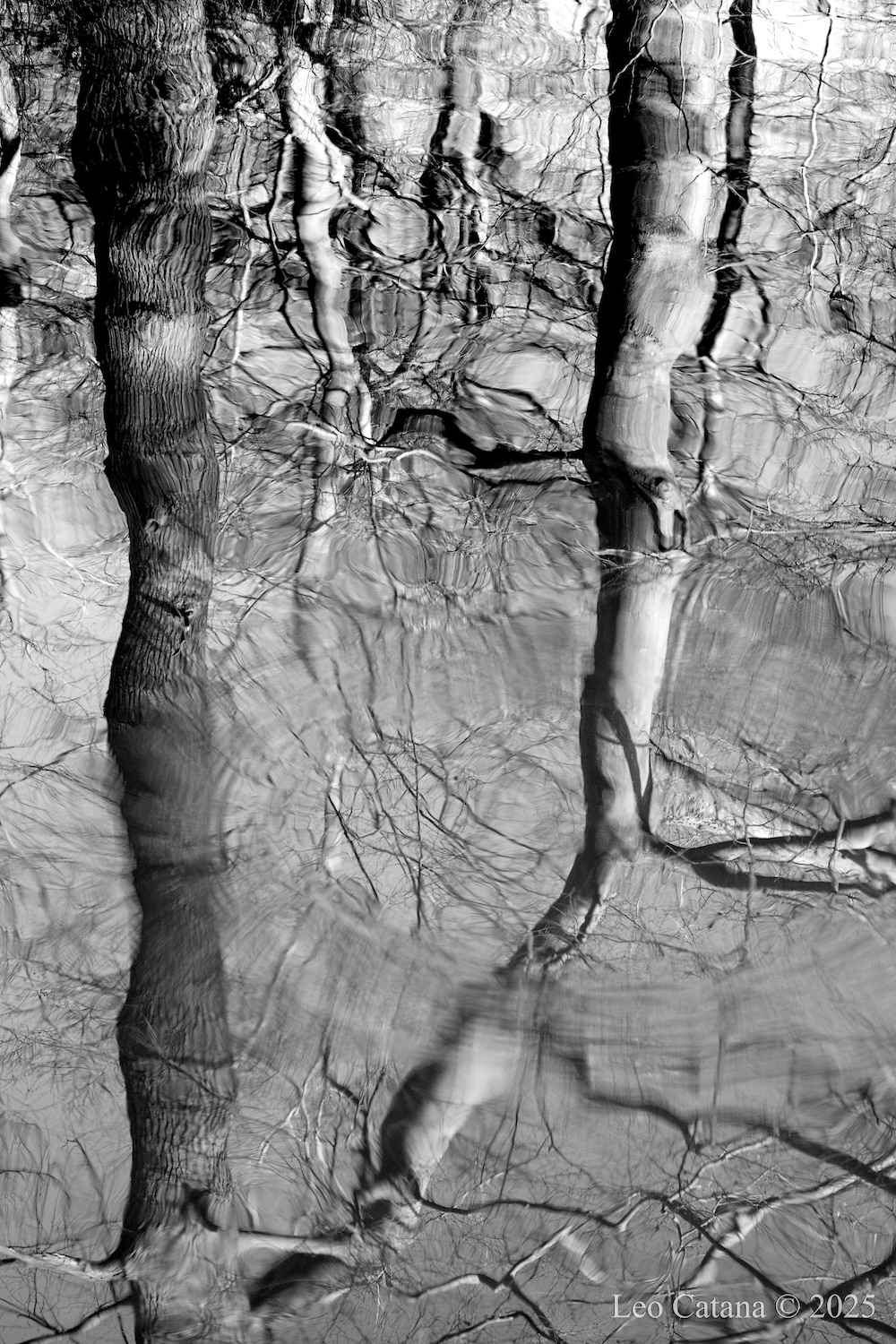
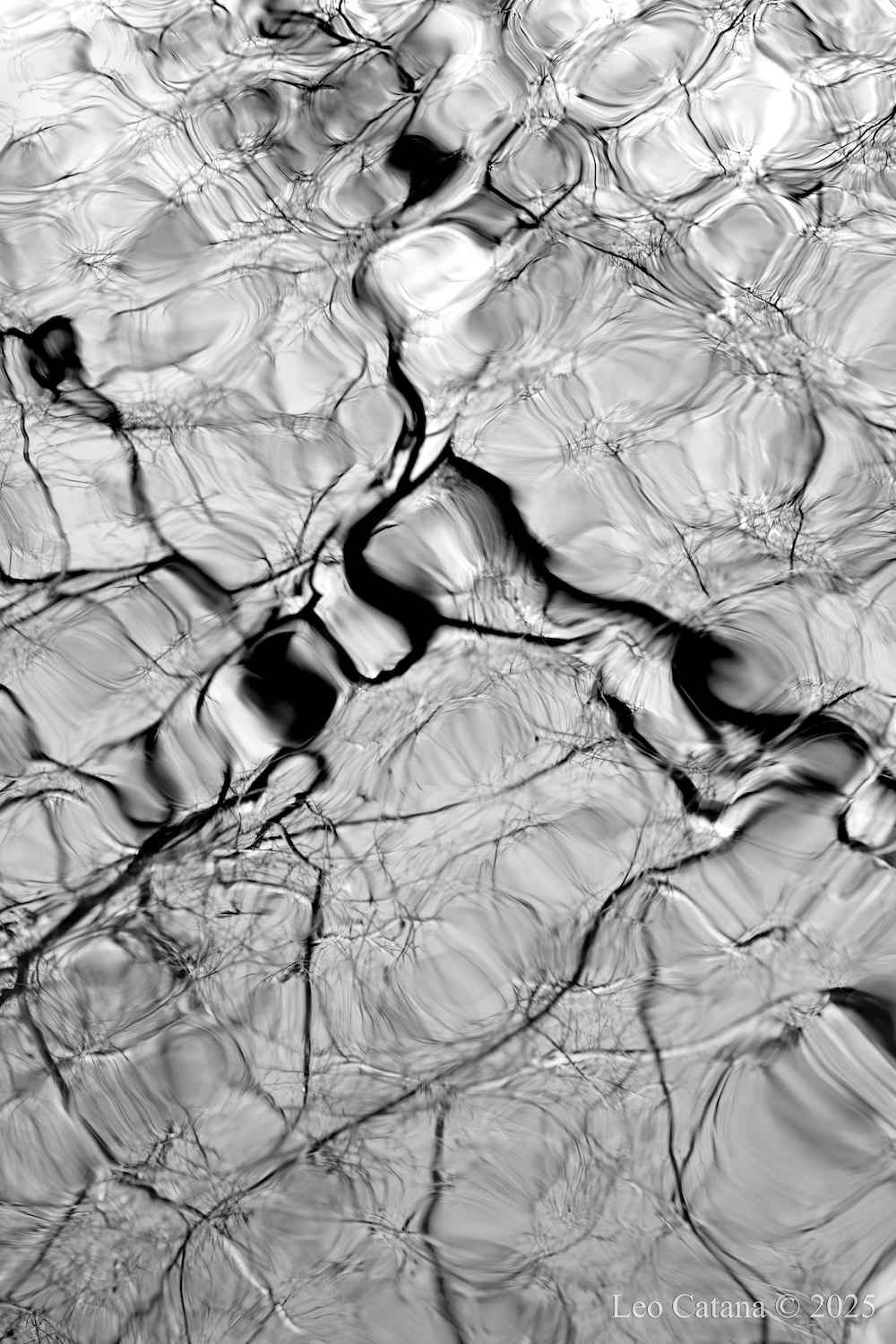
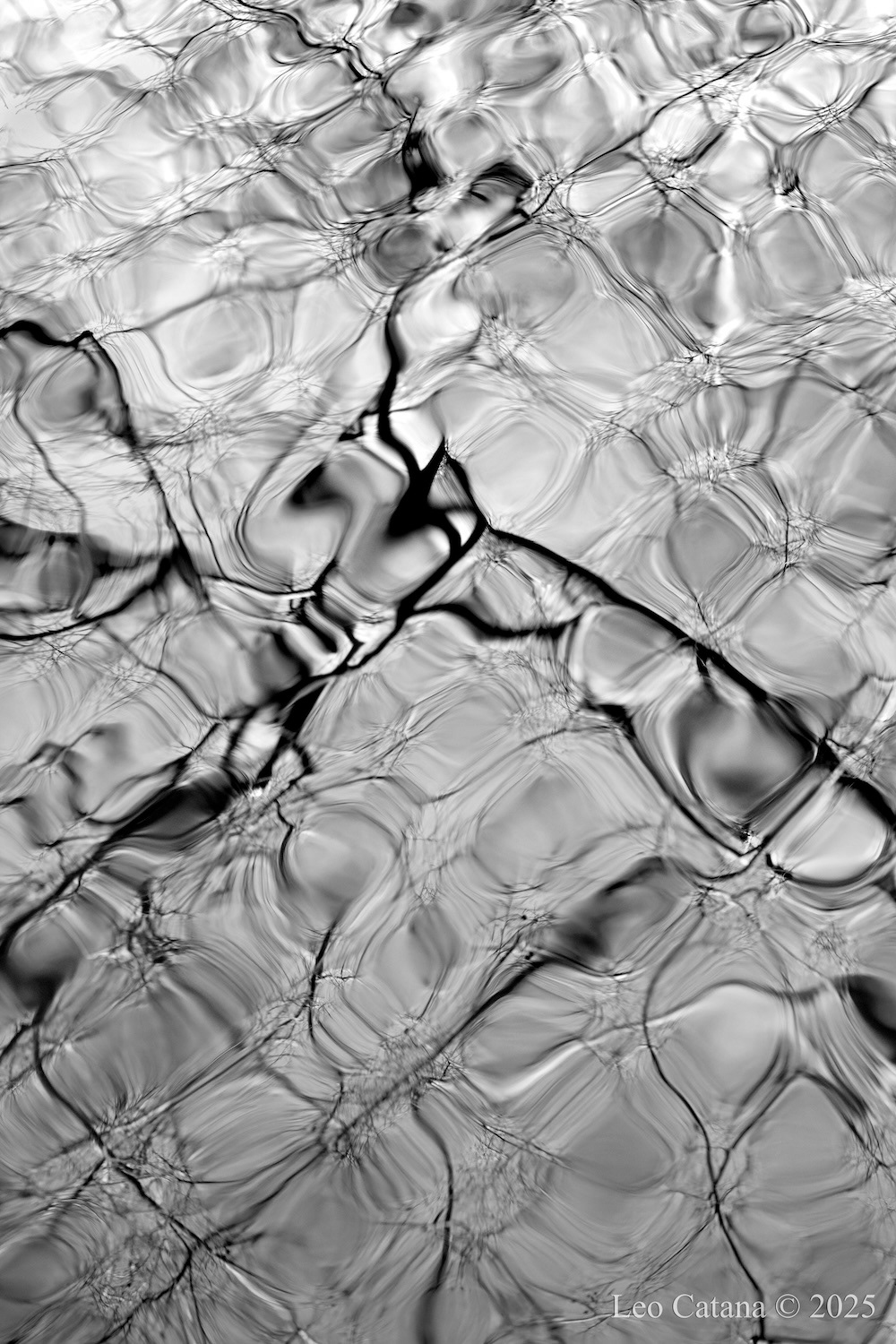
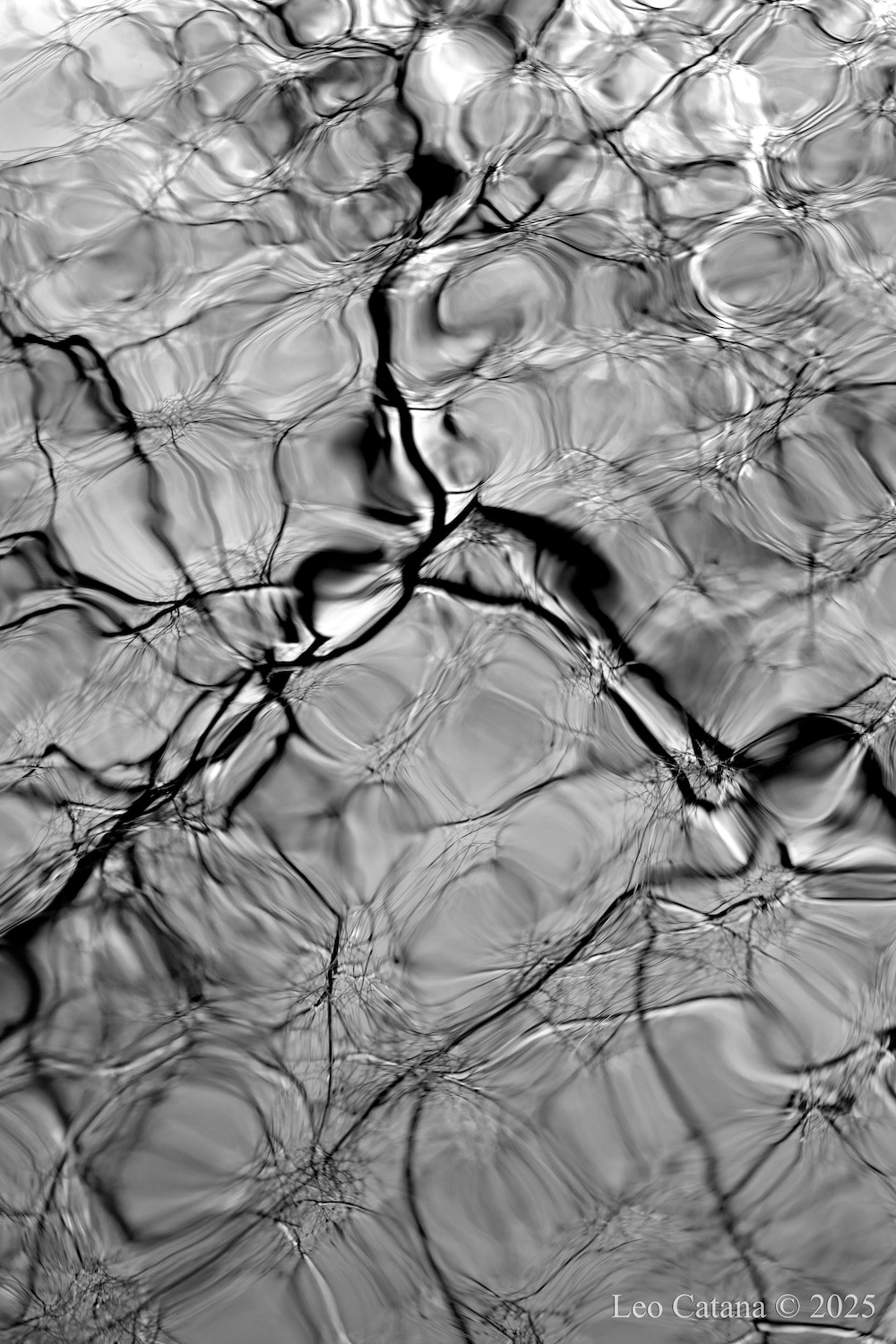
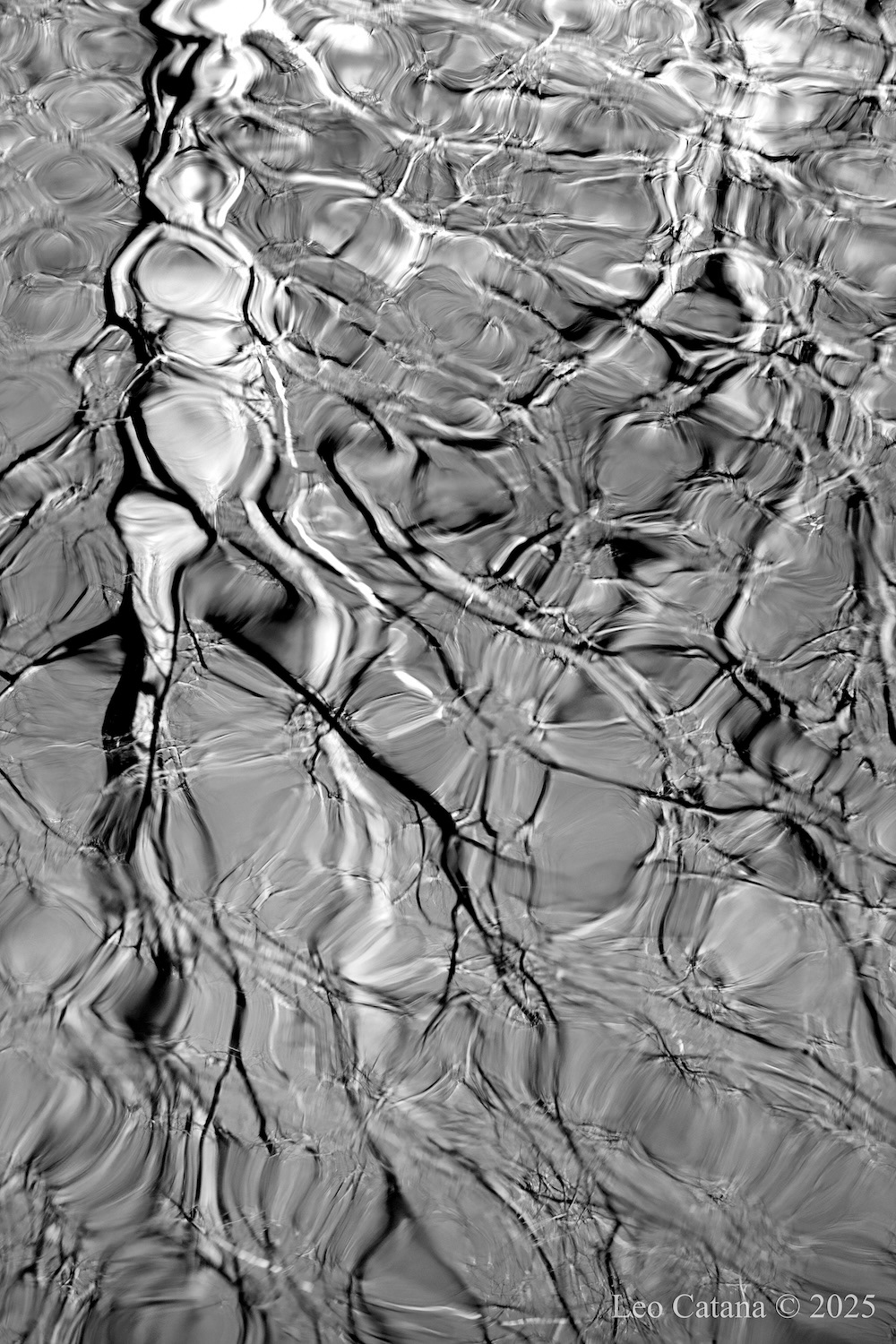
Walking along a body of water, I noticed that direct, low sunlight hit the trees on the other side of the water, but not the water itself. The reflections in the water were distorted by the slight weaves on the surface, creating a double illusion: The reflections of the trees were an illusion of the trees themselves, but the waves created another illusion in this first illusion by distorting the lines of reflected trunks, branches and twigs. As I started photographing the scene, I noticed that different times of capture froze or prolonged the movements of the waves, radically changing the image’s structures and upsetting the recognizability of the original trees reflected in the water. What was all this about? The desire to recognize the world, pure and simple? Perhaps: When we try to make sense of the world around us, are we not bringing together observable cues about it, mapping its structure, continuing until we have arrived at something that we believe is its basic structure? Is that all there is to it? Or, alternatively, are we doing more than just making sense of these cues? Are we also stretching out some part of ourselves, striving to become one with this world and to receive it in its transitory appearances? Or, even more unsettling: Is our desire to commune with this world what drives us in the first place to make sense of its cues?